 Tromsø Reindeer Sledding
Is Reindeer Sledding in Tromsø Ethical? An Honest Answer
Is reindeer sledding ethical? Here is what the Tromsø listings and the law say. Reindeer sledding in Tromsø can be an ethical choice: reindeer herding here is a Sámi livelihood protected by Norwegian law, and the rides are slow caravans where guests do not drive. It is not automatically ethical at every camp, though. Group sizes, herd sizes, weight limits and snow policies differ a lot between the tours sold in the city, and some listings leave those facts out entirely. This page goes through what is actually stated in the listings, what the law says about who can herd reindeer, and which questions to ask before you pay. If you want to jump straight to comparing camps, the catalog at Tromsø Reindeer Sledding lists every reindeer tour leaving Tromsø with the details side by side.
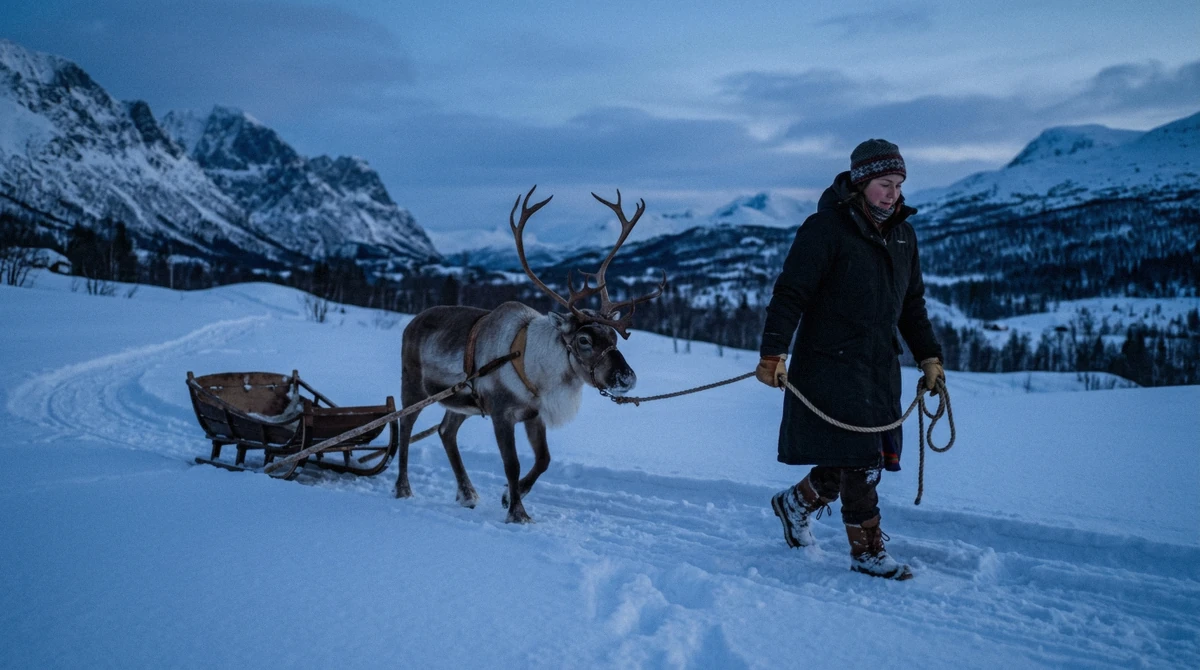
Illustrative image of a herder leading a sled reindeer.
Quick answer The short verdict, the law behind it, and what separates a good camp from a bad booking
Reindeer herding around Tromsø is a Sámi livelihood protected by Norway's Reindeer Husbandry Act of 2007, so the animals are working herd animals, not props imported for tourists. The ride itself is a calm caravan tied in a row behind a lead reindeer, and guests never steer. Ethics here is mostly about numbers: how big the herd is, how many guests arrive at once, how often each reindeer pulls, and what happens when snow is too thin. Those facts are stated clearly on some listings and missing on others. Choose a camp that states them, or skip the sled entirely with a feeding visit.
Key takeaways
- Herding is reserved for people with a reindeer earmark under the Reindeer Husbandry Act of 2007, in practice Sámi families
- Rides are slow caravans led by the herder, and one listing caps riders at 100 kg (about 220 lbs) to keep the reindeer safe
- Group sizes range from 16 guests at the small-group Sámi family visit to around 100 per departure on the largest sledding tour
- Herd sizes range from 5 to 6 reindeer at Camp Tamok in the Tamok valley to about 300 at the busiest camp
- If you prefer no ride at all, the reindeer feeding and Sámi culture visit with lunch is a feeding-only afternoon
Which Reindeer Experience Fits Your Ethics and Your Day
If You want the ride but dislike crowds
Pick a camp that caps its numbers, such as the tour with no more than 45 guests at the camp at once, described on the sledding or feeding page
If You would rather feed reindeer than be pulled by them
There are four options without a sled ride in the catalog, including the feeding and snowshoe hike with bidos lunch
If You want time with one Sámi family in a small group
The small-group family visit with lasso throwing caps the group at 16 and states plainly that there is no sledding
If You weigh more than 100 kg (about 220 lbs)
One listing caps sled riders at that weight for the reindeer's sake, so ask the operator before booking a sled and consider the feeding visit in a turf hut instead
If You want the full reindeer day in a small dose of time
The sledding, feeding and storytelling tour from the bus terminal packs a ride, feeding and a hot lunch into 4 hours
Who Owns the Reindeer, and Why That Matters
Tromsø sits inside Sápmi, the traditional land of the Sámi, the Indigenous people of northern Norway, Sweden, Finland and the Kola peninsula. Reindeer herding here is not a costume put on for visitors. It is a regulated livelihood.
Under Norway's Reindeer Husbandry Act of 2007, reindeer herding inside the Sámi reindeer herding area is reserved for people who hold a reindeer earmark. In practice that means Sámi families with herding in the family. The herding area covers about 40 percent of Norway.
For a traveller asking whether the activity is ethical, this is the foundation: the animals belong to herders with a legal and cultural stake in them. You can read more about the herding framework on the International Centre for Reindeer Husbandry's Norway page.
One honest caveat. A legal framework for herders does not by itself guarantee anything about how each camp handles its animals on the day you arrive. That is why the rest of this page looks at the operational details that are actually written down: group sizes, herd sizes, weight caps and snow rules.
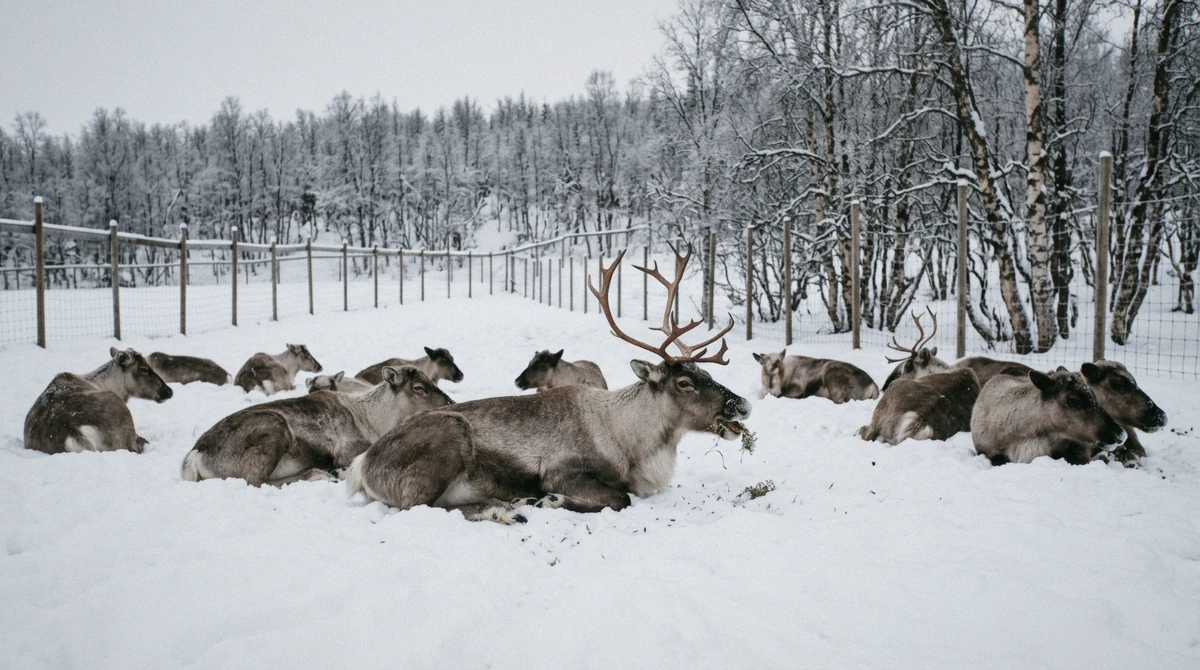
Illustrative image of reindeer resting in a camp enclosure.
What a Sled Ride Actually Involves
If your mental image comes from husky racing, recalibrate it. Reindeer sledding near Tromsø is done in a caravan, called a raid on one listing. Each reindeer and its sled are tied in a row behind a lead reindeer that the herder leads on foot or by ski.
Guests sit in the sled. You do not steer, you do not drive, and you do not hold reins.
- The reindeer walk at a calm pace, so the ride is quiet and slow
- Sleds are often shared by two people, as on the Sámi-guided lunch tour where the ride lasts up to 30 minutes
- The sled can jolt over uneven snow, which one listing flags for travellers with back or spine problems
- Rides happen only when snow conditions allow it, and operators shorten or cancel them on thin or icy snow
Because guests do not control the animals, the welfare question sits almost entirely with the herder rather than with you. The herder decides how many reindeer work, how long the caravan runs and when conditions are too poor. Your leverage as a traveller is choosing which camp you pay, and asking the questions in the section further down.
Herd Sizes and Group Sizes at the Compared Camps
These two numbers say more about a camp's character than any slogan. A small herd with a big daily arrival means each animal meets a lot of strangers, while a large herd split across a small group spreads the contact thin. The figures below come straight from the listings compared on this site, alongside what each camp charges per person in US dollars.
| Camp or tour | Herd size stated | Group size stated | Price per person |
|---|---|---|---|
| Sledding, feeding and storytelling from the bus terminal | About 300 reindeer | Large shared groups at a busy camp | $201 |
| Sledding or feeding at a Sámi camp | A herd you hand-feed on the feeding option | No more than 45 guests at the camp at once | $133 |
| Night sledding with a three-course Sámi dinner | About 300 reindeer | Large shared groups | $222 |
| Sámi-guided sledding with a traditional lunch | Reindeer fed at the camp | Up to 100 per departure, 2 guests per sled | $238.90 |
| Feeding and Sámi culture with lunch in a turf hut | Reindeer you hand-feed and pet | Shared group | $180 |
| Camp Tamok sledding day in the Tamok valley | 5 to 6 reindeer kept at the camp | Shared group | $339 |
| Small-group Sámi family visit | The reindeer of one Sámi family | Up to 16 | $195.91 |
| Feeding and snowshoe hike with bidos lunch | The herd at the camp | Up to 25 | $194.82 |
| Sámi reindeer camp and aurora night | The herd at a Sámi reindeer camp | Up to 18 | $201.35 |
Notice the spread. The most booked camp holds about 300 reindeer but also draws large shared groups, and recent reviewers there ask for clearer wording when a sled ride is cancelled for poor snow. At the other end, the small-group family visit caps 16 guests and the aurora night caps 18 in a heated minibus.
If low guest numbers matter to you, the price of recommended Tromso reindeer sledding is not the only number to compare, and sometimes not even the deciding one, since the $133 budget option caps its camp at 45 guests.
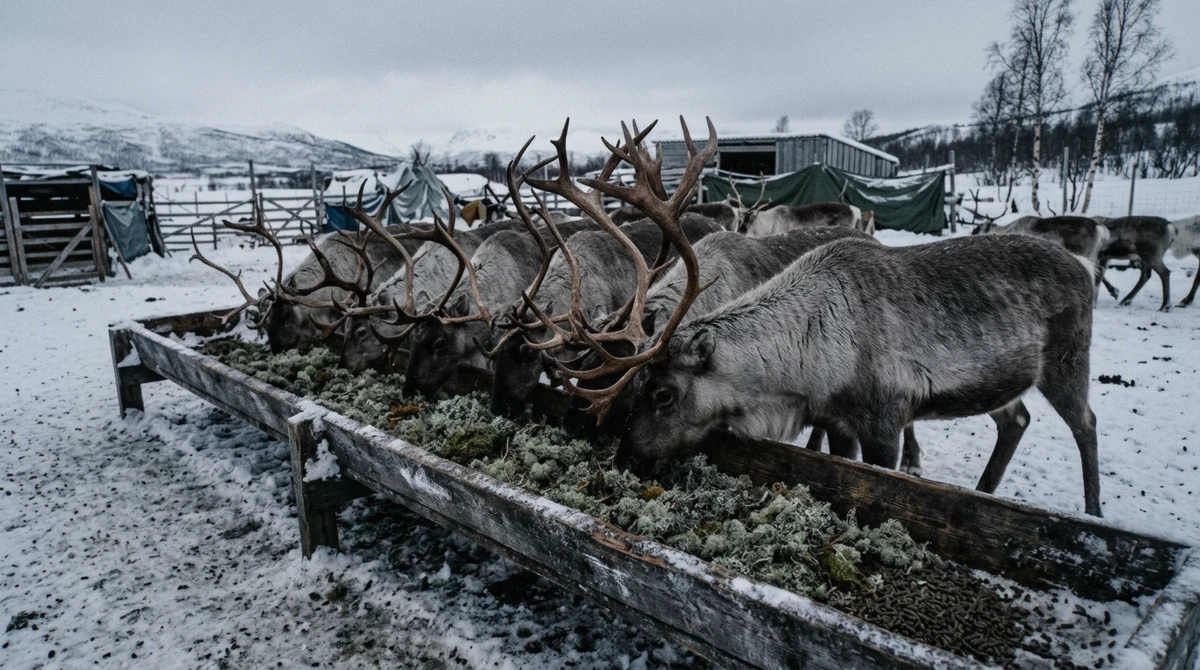
Illustrative image of reindeer at a feeding trough.
Weight Limits, Age Rules and Physical Asks
A reindeer is a large animal but it is not a machine, and pulling a loaded sled is real work. One Tromsø listing, a Sámi-guided sledding operation, caps sled riders at 100 kg (about 220 lbs) so the reindeer stay safe and healthy, and shares each sled between two guests. Other listings do not print a weight figure at all, which does not mean the limit does not exist.
It means you should ask.
| Restriction | What the listings state | Reason given |
|---|---|---|
| Weight (individual) | One Tromsø listing caps sled riders at 100 kg (about 220 lbs), sleds shared by two on that tour | The listing says it keeps the reindeer safe and healthy |
| Minimum age | All ages on four tours, from 4 at Camp Tamok, from 6 on the family visit and the aurora night, from 8 on the snowshoe tour | Not explained in the listings |
| Back or spine problems | One listing advises thinking twice because the sled can jolt | Reviewers describe the sled as jolting |
| Mobility limitations | The turf hut feeding visit is not suitable for wheelchair users or people with mobility impairments, Camp Tamok is not suitable for wheelchair users | Not explained in the listings |
| Pets and fragrances | Strong fragrances are not allowed near the herd on two listings, pets are not allowed on several | Not explained in the listings |
None of the compared listings states a maximum age, a combined weight for shared sleds, a pregnancy policy or rules for heart conditions or recent surgery. Those gaps are covered in the questions to ask below, because a phone call before booking is the only way to close them.
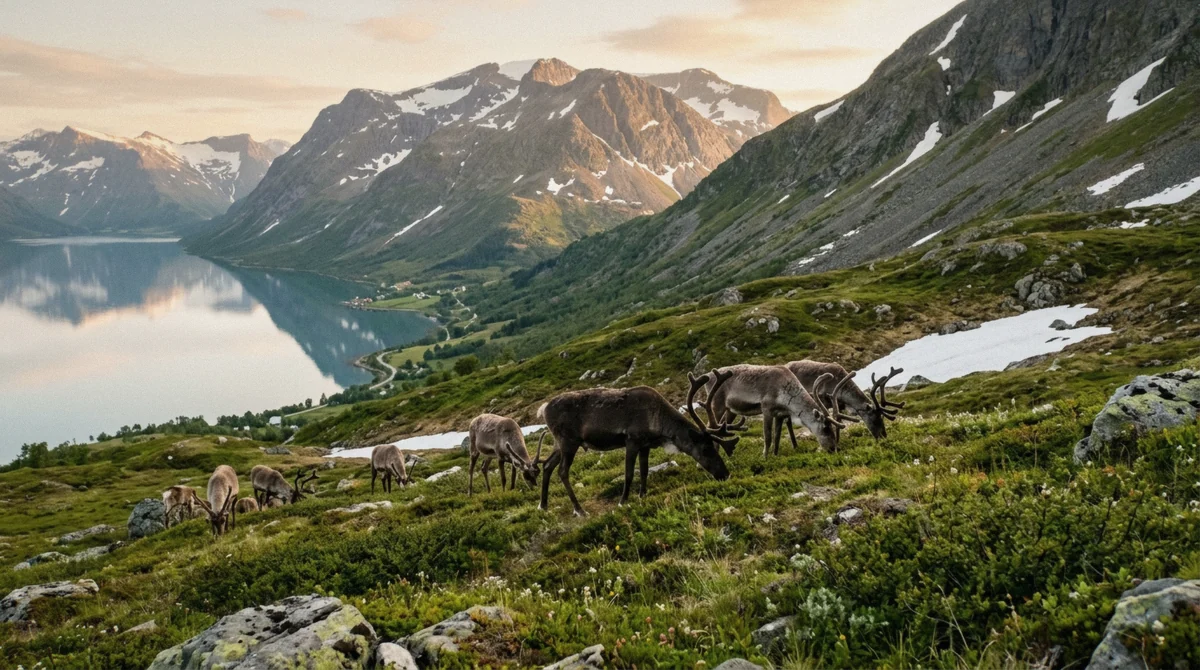
Illustrative image of reindeer on summer tundra.
Snow Policies: What Happens When the Snow Is Poor
Sled rides depend on snow. The season is snow-dependent and runs roughly November to early April, with December to March the most reliable stretch. Early season and late season can bring thin or icy ground, and this is where camps reveal how they treat both the animals and their guests.
The pattern in the listings is that operators shorten the ride or cancel it when conditions are wrong, and the listings that state a policy give a partial refund while the rest of the visit goes ahead. On the Sámi-guided lunch tour, if the snow is too poor to sled at all you get a partial refund and the day runs as normal with feeding and the meal. That is the outcome you want: the reindeer are not asked to pull on bare or treacherous ice, and you are not simply out of pocket.
The small-group family visit runs in most weather and is cancelled with a refund in genuinely bad conditions.
Recent reviewers at the busiest camp ask for clearer wording when the ride is cancelled, which tells you the message does not always reach every guest. Before you book, check the cancellation deadline, which is a free cancellation up to 24 hours before the start on every tour in this catalog, and ask the operator what happens to the sled portion specifically if the snow fails. If you are booking early in the season, our guide to the best time for reindeer sledding in Tromsø goes deeper into month by month snow odds.
What the Listings Do Not Say, and the Questions Worth Asking
Reading nine listings side by side makes the gaps obvious. Almost every camp publishes a price, a duration and a meeting point. Far fewer publish how long each sled ride lasts, how many rides each reindeer does per day, or what the herd does in summer.
None of the compared listings states a formal animal welfare certification. That does not make the camps unethical, but it does mean the burden of checking falls on you.
- Who owns and herds the reindeer at this camp, and are the hosts Sámi herders
- How long is the sled ride, and how many times a day does each reindeer pull
- Is there a weight limit for riders, and how are guests paired on shared sleds
- What happens to the herd outside the snow season, and what do the reindeer do in summer
- Exactly what is the snow policy, and is the sled portion refunded if the ride is cancelled
- How many guests are at the camp at the same time on a typical departure
An operator who answers these plainly is a good sign. An operator who cannot say how often each reindeer works is giving you a reason to pick a different camp. The sledding or feeding tour with camp photos states its camp cap of 45 guests up front, which is the kind of transparency that makes choosing easy.
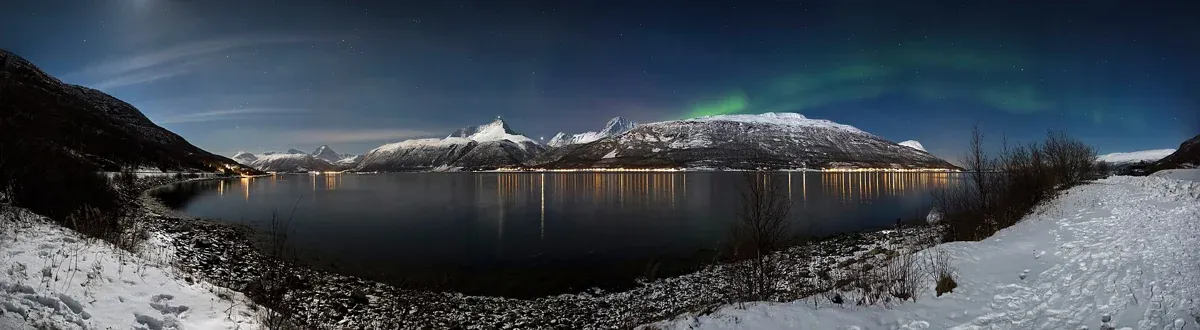
Aurora over Storfjorden and the Lyngen Alps. Photo: Ximonic (Simo Räsänen), CC BY-SA 3.0, via Wikimedia Commons.
Choosing a Small-Group or Feeding-Only Visit Instead
Plenty of travellers decide the sled is the part they can take or leave. Four of the nine options in the catalog involve no sledding at all, and they are not consolation prizes. Hand-feeding a calm herd, hearing a joik inside a lavvu and eating bidos stew by a fire is the cultural core of the experience, and the reindeer get to simply stand and eat.
Small-group options
The small-group Sámi family visit with lasso throwing caps the group at 16 and puts you with one family at their camp, where you learn how herders catch reindeer with a lasso and then feed the animal you caught. It holds a 4.9 rating from 78 reviews, the highest in the catalog. The Sámi reindeer camp visit and aurora night takes up to 18 guests in a heated minibus and adds a northern lights hunt in the wilderness, with warm overalls lent in sizes XS to XXXL.
Feeding-only afternoons
The feeding and Sámi culture visit with lunch in a turf hut costs $180 and runs 4.5 hours, with hand-feeding and petting for as long as the feed lasts. The feeding and snowshoe hike with bidos lunch adds a beginner snowshoe walk, runs from 1 December to 31 March, suits ages 8 and over and needs you to bring your own winter boots. If you are bringing children, our post on reindeer sledding in Tromsø with kids maps the age rules tour by tour.
Reindeer Sledding Compared With Dog Sledding
The two Arctic sledding experiences ask different things of their animals, and the ethics question is different for each. Reindeer walk at a calm pace in a caravan led by a herder, and the guest is a passenger. Dog teams run, and on self-drive husky tours the guest steers and brakes their own sled, which puts the pace under human rather than animal control.
| Aspect | Reindeer sledding | Self-drive husky sledding |
|---|---|---|
| Pace | Reindeer walk slowly in a led caravan | Dog teams run at speed following a guide |
| Who controls direction | The herder leads, guests do not steer | The guest drives and brakes their own sled |
| Typical entry price in Tromsø | From $133 in this catalog | From about $233 on listed husky tours |
| Group size in this comparison | From 16 guests up to around 100 per departure | Not stated for husky listings here |
A self-drive husky listing in Tromsø starts from $233 per person and the most reviewed one reaches about $356, so the reindeer option is usually cheaper as well as slower. Which is more ethical has no blanket answer, because both depend on the individual kennel or camp, but the guest role differs: on a husky sled you make decisions for the team, on a reindeer sled you are a passenger. Our full comparison of husky versus reindeer sledding in Tromsø works through the trade-offs in detail.
Culture, Season and Seeing Reindeer Beyond the Camp
An ethical visit respects the culture that makes the activity possible. The camps fold Sámi life into every tour: stories in a lavvu, a joik sung by the guide, Sámi artefacts shown at the table and bidos stew cooked over the fire. Tromsø itself offers more.
The city museum runs guided tours of its Sámi exhibitions, including one on the Sámi political and cultural awakening after 1945, which you can book through Visit Tromsø.
Sámi National Day falls on 6 February, and during Sámi Week in early February the Norwegian Reindeer Racing Championships take over Storgata, the main street, with reindeer pulling racers on skis over a 201 meter sprint. Racing has been part of Sámi Week since 2004 and watching from the street is free. The Sámi Parliament of Norway sits in Karasjok and first met in 1989, as the elected body of the Sámi in Norway.
Seeing reindeer in a racing or herding context, rather than only as a photo prop, is a good way to understand the animal's real place in Sámi life. Our guide to Sámi culture in Tromsø lists the museums and events.
Timing matters for the animals too. Sledding needs snow, so outside roughly November to early April the camps switch to feeding and culture visits with no sledding, and reviewers have booked feeding visits in June and August. Winter in Tromsø is cold for guests as well, with average highs around -1°C (30°F) in January and lows near -5.3°C (22°F), so read our guide on what to wear in Tromsø winter before you go.
Questions and Answers
Is reindeer sledding cruel?
There is no evidence in the listings that it is, and the structure of the activity is gentle by design: the reindeer walk in a led caravan at a calm pace and guests do not drive. What matters is the camp you pick, since group sizes range from 16 guests to around 100 per departure and only some listings state weight limits and snow policies. Ask the operator how often each reindeer pulls before you book.
Do reindeer like pulling sleds?
No one can read a reindeer's mind, and the listings do not claim to. What is stated is that the sled reindeer are trained for the activity and pull slowly and calmly in a caravan behind a lead reindeer. Rides are also shortened or cancelled on thin or icy snow, which suggests the animals are not pushed through poor conditions.
Is there a weight limit for reindeer sledding?
One Sámi-guided Tromsø listing caps sled riders at 100 kg (about 220 lbs) so the reindeer stay safe and healthy, and on that tour sleds are shared by two people. Most other listings print no weight figure, so if you weigh close to or above that mark, ask the operator before booking. Feeding-only visits have no stated weight limit.
Are the reindeer in Tromsø wild?
No. The reindeer on these camps are semi-domesticated herd animals owned by herders, not wild animals. Under Norway's Reindeer Husbandry Act of 2007, herding inside the Sámi reindeer herding area is reserved for people with a reindeer earmark, in practice Sámi families with herding in the family.
Is reindeer sledding or dog sledding more ethical?
Neither has a blanket answer, because both depend on the operator. The guest's role differs: on a reindeer sled you ride in a slow caravan led by a herder, while on a self-drive husky tour you steer and brake your own team. Read our husky versus reindeer comparison before deciding which suits you.
How do I choose an ethical reindeer tour?
Look for listings that state the facts plainly: group caps, herd size, ride length, weight limits and the snow policy. Ask who owns and herds the reindeer, how long each ride lasts, how often each animal works and what happens to the herd in summer. Operators who answer without hedging are the ones to book.
Are reindeer nice to humans?
The camps describe calm animals that eat from your hand, and feeding is part of most tours in the catalog. They are still large herd animals with unpredictable moments, which is why listings tell guests to follow the herder's instructions and why strong fragrances are banned near the herd on some tours.
Is dog sledding ethical?
The ethics of dog sledding depend on the kennel, and this site's catalog covers reindeer tours only. What can be said from the Tromsø listings is that self-drive husky tours there lend proper arctic gear, set minimum ages of 4 to 7 and follow a guide, but they do not publish information about how the dogs live. Ask the same questions you would ask a reindeer camp: rest, workload and what happens to the animals outside the season.