 Tromsø Reindeer Sledding
What to Wear in Tromsø in Winter: From the Sled to the Street
What to wear in Tromso in winter is simpler than it looks. For a winter trip to Tromsø, wear three layers: a wool or synthetic base, a fleece or wool mid layer, and a windproof insulated jacket, plus winter boots, mittens and a hat. You can relax about some of the bulky items, because three of the reindeer tours compared here lend a thermal suit, overalls or warm clothing at the camp. The city does more of the work against you than the sled does. Tromsø sits about 350 km north of the Arctic Circle, the average January high is just -1.0°C (30.2°F), and the pavements freeze into sheet ice, especially early in the winter. Out at the camps it is often colder than in town, and sitting on an open sled adds wind chill on top of the air temperature. This guide covers the layers, the boots and ice grips that save you on the streets, what each compared tour actually hands out and what it does not, how to keep your phone alive in the cold, and a checklist you can pack from. Start with the popular Tromso reindeer sledding catalog if you have not picked a tour yet, because the gear question depends on which one you book.
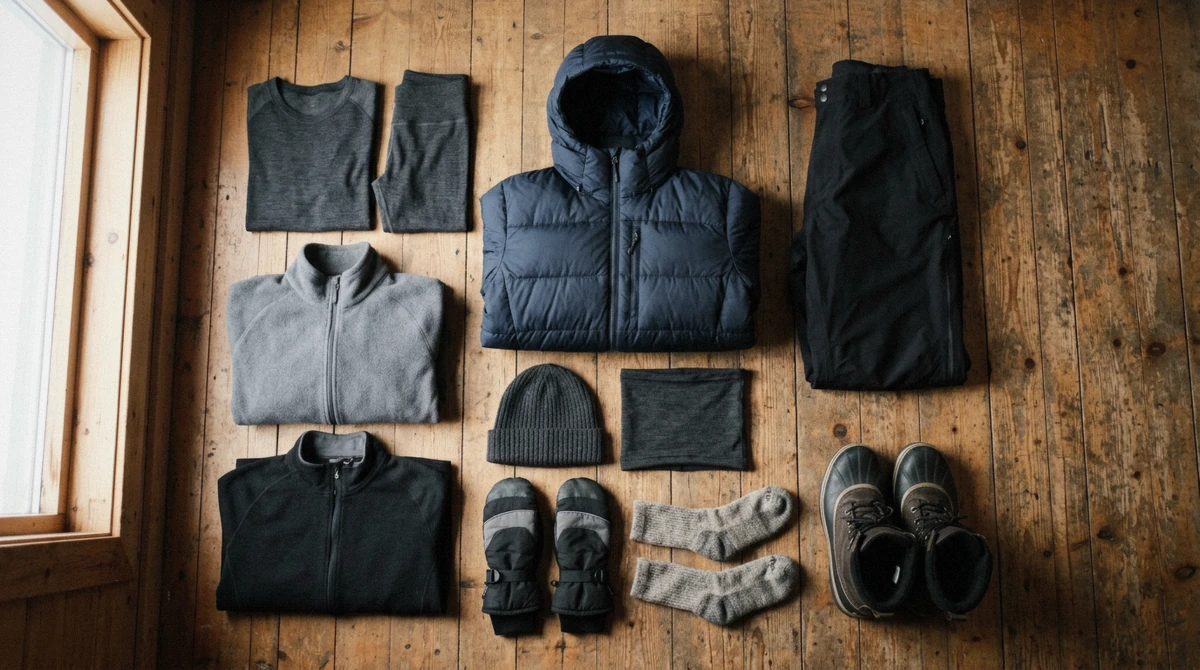
Illustrative image of a layered winter kit.
Quick answer Three layers, insulated boots, mittens, and check what your tour lends
Wear a merino or synthetic base layer, a fleece or wool mid layer and a windproof insulated jacket, with waterproof winter boots, mittens and a hat covering the ears. Several tours lend the heavy gear: the Camp Tamok day includes a thermal suit, winter boots, mittens and a hat, the budget sledding-or-feeding tour includes clothes, and the aurora night lends warm overalls in sizes XS to XXXL. The snowshoe tour is the exception and lends no boots or winter clothing, so the whole kit is on you. The camps outside town are often colder than the city, and January lows average -5.3°C (22.5°F) even before wind chill. Ice grips for your boots are the one cheap purchase that pays for itself on Tromsø's frozen pavements. Skip jeans and cotton next to the skin, and keep your phone in an inner pocket because cold drains the battery fast.
Key takeaways
- Do not buy a parka for one trip. The Camp Tamok reindeer sledding day includes a thermal suit, boots, mittens and a hat, so the heavy gear is covered.
- What stays on your list: base and mid layers, wool socks, your own hat and scarf, and the snowshoe and feeding hike asks for your own winter boots too, since none are lent.
- The number one mistake is jeans or cotton thermals. Cotton holds sweat, stays wet and will freeze on you during night sledding with a Sami dinner.
- The numbers to plan around: January averages -1.0°C (30.2°F) high and -5.3°C (22.5°F) low in town, with record lows around -18°C (-0.4°F), and the camps are colder.
- Footwear in one line: insulated waterproof winter boots with room for a thick wool sock, plus ice grips for the icy city streets.
How much gear do you actually need to buy?
If You book the Camp Tamok day or the budget sledding-or-feeding tour
Buy almost nothing heavy. Camp Tamok reindeer sledding lends a thermal suit, winter boots, mittens and a hat, so you only need base layers and wool socks.
If You book the reindeer camp and aurora night
Warm overalls are lent if you tell the operator your size from XS to XXXL when you book the Sami camp and northern lights night. Bring your own warm layers underneath and your own boots.
If You book the snowshoe hike and feeding tour
Bring everything. On the feeding and snowshoe tour with bidos lunch winter boots and clothing are not provided, only the snowshoes and poles.
If You are mostly walking the city between tours
Spend your money on boots and ice grips rather than a giant parka, since Tromsø's streets turn to sheet ice early in the winter.
If You are still choosing between reindeer and husky sledding
Read husky versus reindeer sledding in Tromso for the pace, price and gear differences before you buy anything.
How cold is it really, in town and on the sled
Tromsø's coastal location keeps the winter milder than the latitude suggests, but mild Arctic is still properly cold, and the numbers you pack for are the ones at the camp, not the airport. The figures below are Norwegian Meteorological Institute normals for 1991 to 2020. Camps sit outside the city, from a short seaside drive to 1.5 hours inland to Camp Tamok in the Tamok valley, and inland valleys run colder than the coast.
Wind chill on an open, moving sled makes it feel several degrees colder again.
The table shows the averages you should pack around. The coldest recorded lows are around -18°C (-0.4°F), so a genuinely cold snap can go well below the normal column.
| Month | Average high | Average low | What that means for you |
|---|---|---|---|
| November | 2.1°C (35.8°F) | -1.9°C (28.6°F) | Thaw and freeze cycles, icy streets |
| December | 0.3°C (32.5°F) | -3.9°C (25.0°F) | Polar night from about 26 November, blue twilight at midday |
| January | -1.0°C (30.2°F) | -5.3°C (22.5°F) | Polar night until about 15 January, snow reliable at the camps |
| February | -1.2°C (29.8°F) | -5.6°C (21.9°F)) | Coldest month on average, daylight returning |
| March | 0.6°C (33.1°F) | -4.4°C (24.1°F) | Longer days, bright light on the snow, still frozen |
Two extra numbers matter more than the averages. First, the sun stays below the horizon from about 26 November to 15 January, so a headlamp or a headlamp app on your phone is genuinely useful for finding your way to a morning meeting point. Second, the meeting points are all within a few minutes on foot of each other in the harbour-side centre, at the Prostneset bus terminal, the Radisson Blu Hotel on Sjøgata, Skansegata 9 or the Magic Ice Bar on Kaigata, so you will stand around outside in the coldest part of the day waiting for your bus.
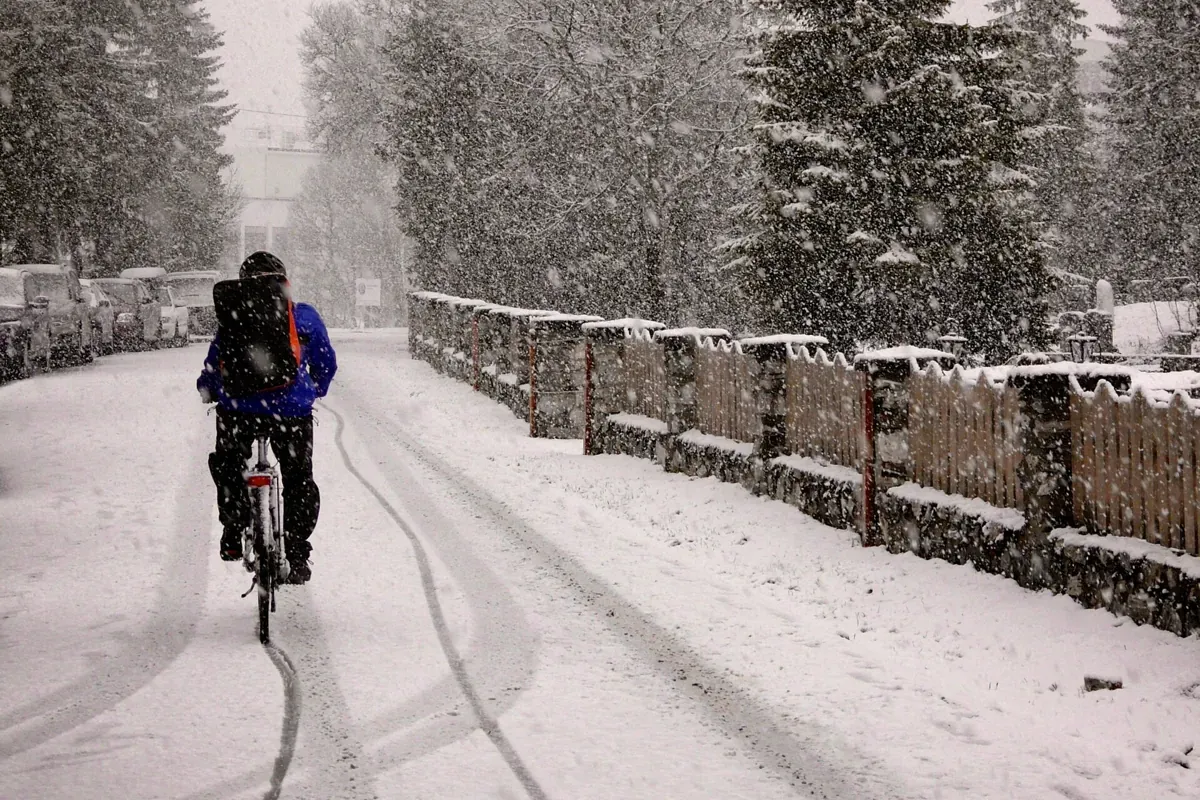
Heavy snowfall in Tromsø. Photo: Gonzalo Malpartida, CC BY-SA 3.0, via Wikimedia Commons.
The layer system that works at -10°C (14°F) and at 0°C (32°F)
Base layer
Merino wool or synthetic thermals, top and bottoms, snug but not tight. The first rule is no cotton next to the skin. Cotton soaks up sweat on the walk to the bus terminal and then holds that moisture against you for hours.
Two warm layers is the minimum wording the tour listings themselves use, and your base layer is the first of them.
Mid layer
A fleece or wool sweater over the base, and on the coldest days a second light mid layer on your legs. This is the layer that does the insulating, so treat thickness as adjustable. If you know your tour lends a thermal suit, keep the mid layer thin, because a fleece plus a suit over it gets sweaty the moment you step into a warm lavvu.
Outer layer
A windproof, insulated jacket and insulated trousers, or a thermal suit if the tour lends one. Windproofing matters more than down fill here, because the cold you feel on the sled is moving air. If your own jacket is a shell rather than an insulated parka, bulk up the mid layer underneath.
Boots, ice grips and what to put on your feet
- Insulated waterproof winter boots, the single most important purchase, with room for a thick wool sock without squeezing your toes
- Wool socks, one pair worn and one spare in your day pack, because damp socks are the fastest route to cold feet
- Ice grips or spikes that strap over your boots, cheap and close to essential on Tromsø's frozen pavements, especially November to January
- Sneakers for the flight and for indoors only, never for a tour, since the listings all ask for proper winter footwear
- Leave heels, smooth-soled boots and fashion leather at the hotel. The streets are ice, not slush, and nothing grips them
The snowshoe tour deserves its own warning. Snowshoes and poles are included on the reindeer feeding and snowshoe hike, but winter boots and clothing are explicitly not, and it runs from 1 December to 31 March with a moderate fitness requirement for the walk. It is also the tour with an age minimum of 8 and over.
If your whole winter kit is borrowed from a friend, check it fits before you fly, because there is no rental backstop on this one.
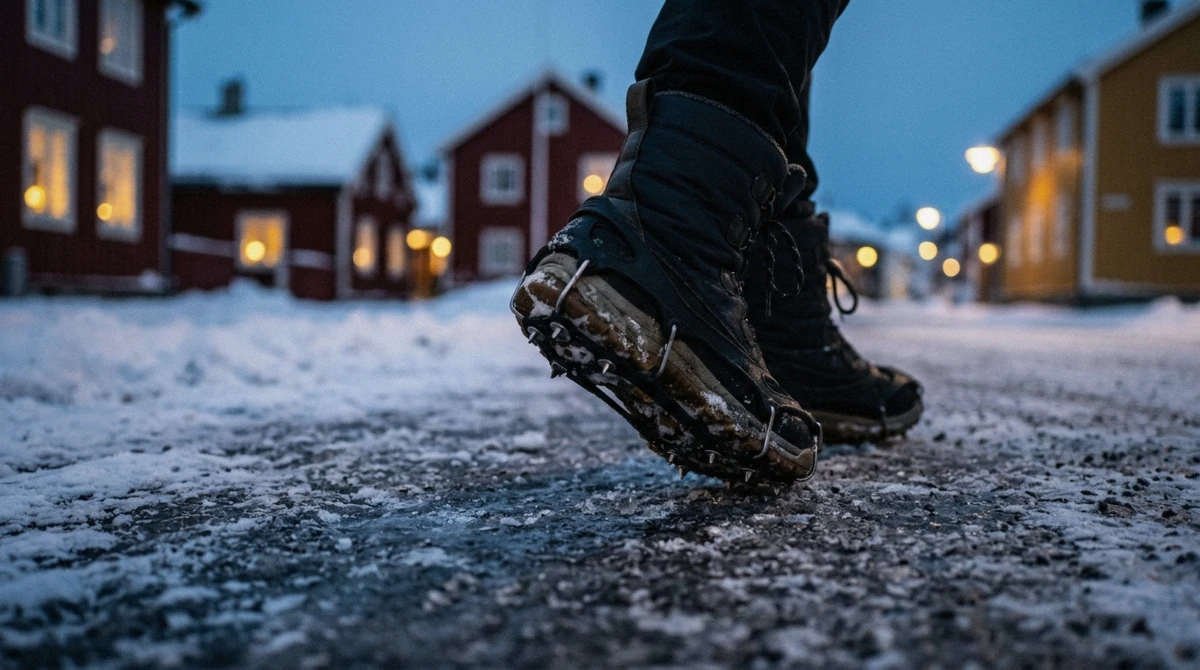
Illustrative image of boots with ice grips on an icy street.
Hands, head and face
Mittens beat gloves, full stop. The listings ask for gloves or mittens, and mittens win: fingers warm each other in a mitten and cool separately in a glove. Bring a thin pair of liner gloves too, for the minutes when you need your fingers for phone photos or zips, and keep the mittens on otherwise.
A hat that covers the ears, a scarf or better a tube neck warmer, and you have covered the parts of you that hurt first.
Skip strong perfume and aftershave on tour days. Two of the listings state that strong fragrances are not allowed near the herd, so save the scent for dinner in town. Sunglasses are worth a pocket space from late February, when the returning sun on white snow is genuinely bright, and a small lip balm and moisturiser fight air that is both freezing and dry.
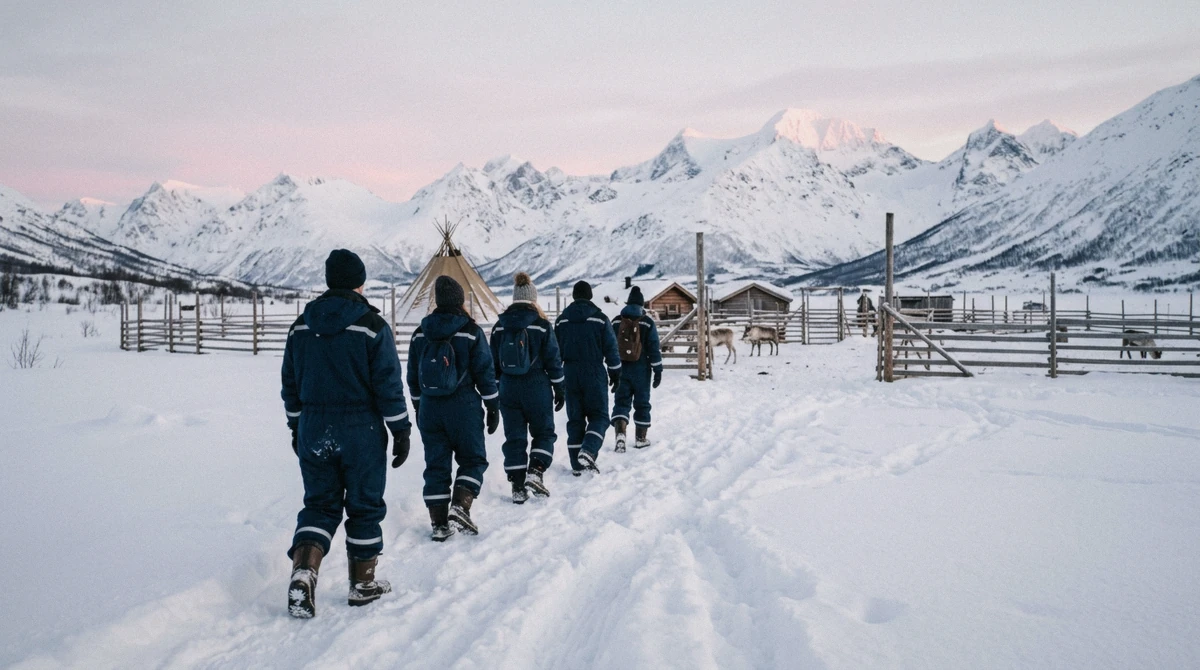
Illustrative image of thermal suits lent at a wilderness camp.
What the tours lend and what they do not
This is where booking the right tour saves you a suitcase full of gear. The comparisons below come from the listings in the Tromso reindeer sledding tours reviewed catalog, and the differences are large. Some tours hand you everything from the boots up, others lend nothing at all, so read the row for your tour before you spend money on a parka.
| Tour | Gear lent | Gear on you | Price per person |
|---|---|---|---|
| Camp Tamok sledding day | Thermal suit, winter boots, mittens, hat | Base layers, wool socks | $339 |
| Sledding or feeding at a Sami camp | Warm clothing | Your own layers, water bottle | $133 |
| Sami camp and aurora night | Warm overalls in XS to XXXL, tell the operator your size | Warm layers underneath, boots | $201.35 |
| Sledding, feeding and Sami storytelling | Nothing stated, listing says wear two warm layers, gloves, hat, winter boots | Everything | $201 |
| Feeding and snowshoe hike | Snowshoes and poles only | Winter boots and all clothing | $194.82 |
Prices are the listed per-person rates in US dollars, and every tour here offers free cancellation up to 24 hours before the start, which matters if a warm-weather week ruins the snow. If you are weighing reindeer sledding against dog sledding, note that self-drive husky listings in Tromsø also lend Arctic suits and boots, and they start around $233, so gear is rarely the deciding factor between the two.
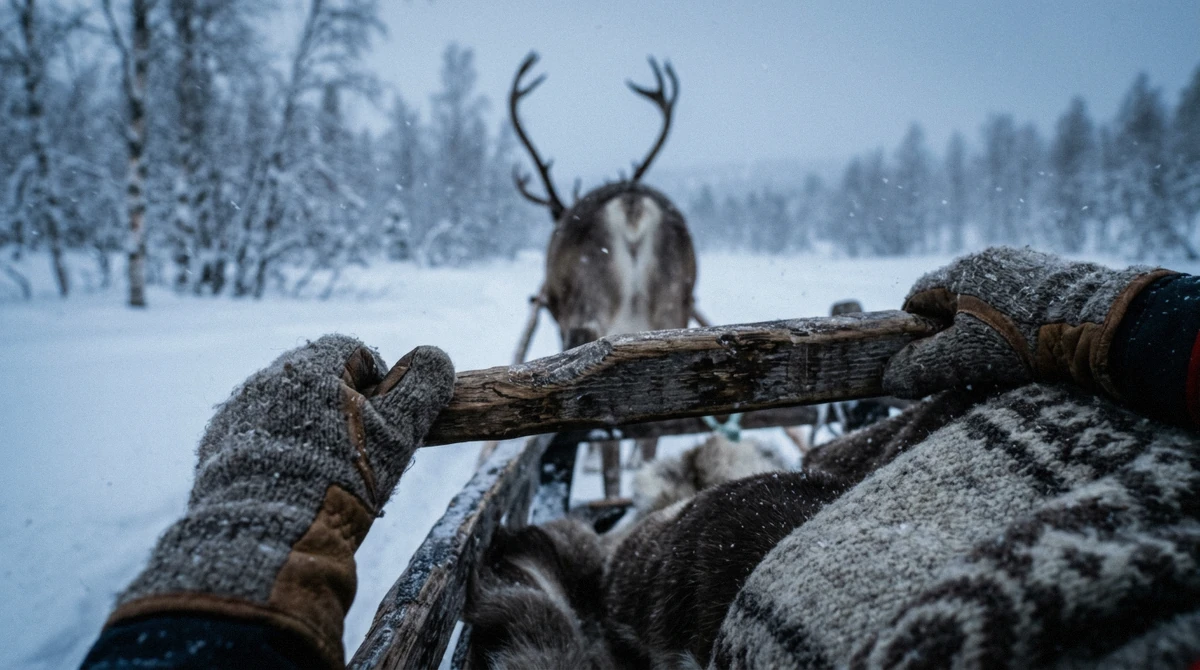
Illustrative image of mittens on a reindeer sled.
What not to wear or bring
- Jeans or any cotton trousers, they stay wet and cold once damp and freeze stiff on the sled
- Cotton hoodies or cotton thermals as a base layer, they hold sweat against your skin for hours
- Strong perfume or aftershave, banned near the herd on two of the listings
- Your whole camera bag, the tours are 3.5 to 9 hours and one warm pocket for a phone beats a heavy pack
- Heels and smooth city soles, the streets are sheet ice and the meeting points are outdoor bus platforms
- Pets, not allowed on several listings, and leave the fragranced hand cream for the hotel
One rule surprises people: fragrance. The feeding and lunch in a turf hut listing and other tours in the same family state plainly that strong fragrances are not allowed near the herd, on the reasonable logic that the reindeer are being hand-fed at close range. If a tour excludes winter clothing from its inclusions, that is a signal to check your own kit twice, not a reason to hope the bus is warm.
Packing by season
The sledding season runs roughly November to early April, snow-dependent, and December to March is the most reliable stretch. What changes across those months is the light, the street ice and how much thaw you meet, not the basic three-layer formula. For the full month-by-month breakdown of snow, aurora and daylight, see the best time for reindeer sledding in Tromso.
| Season | Wear this |
|---|---|
| November to mid-December | Warm base and mid layers, windproof insulated jacket, winter boots with ice grips, mittens, hat, headlamp for the polar night from about 26 November |
| Late December to January | The full kit plus a second mid layer, thick wool socks, neck warmer, spare batteries in an inner pocket, record lows can reach around -18°C (-0.4°F) |
| February | Same as January with sunglasses added, Sámi National Day on 6 February and Sámi Week bring street events worth standing around for |
| March | Base and mid layers, windproof shell over a lighter mid layer on sunny days, sunglasses essential, best daylight for photos of the herd |
| April | Transitional, use the March kit but expect thaw, check the snow policy since sled rides are shortened or cancelled on thin snow |
Outside the snow season the camps switch to feeding and culture visits, which reviewers booked in June and August. If your trip falls outside the snow season, you can leave the thermals mostly at home and pack for a cool northern summer instead.
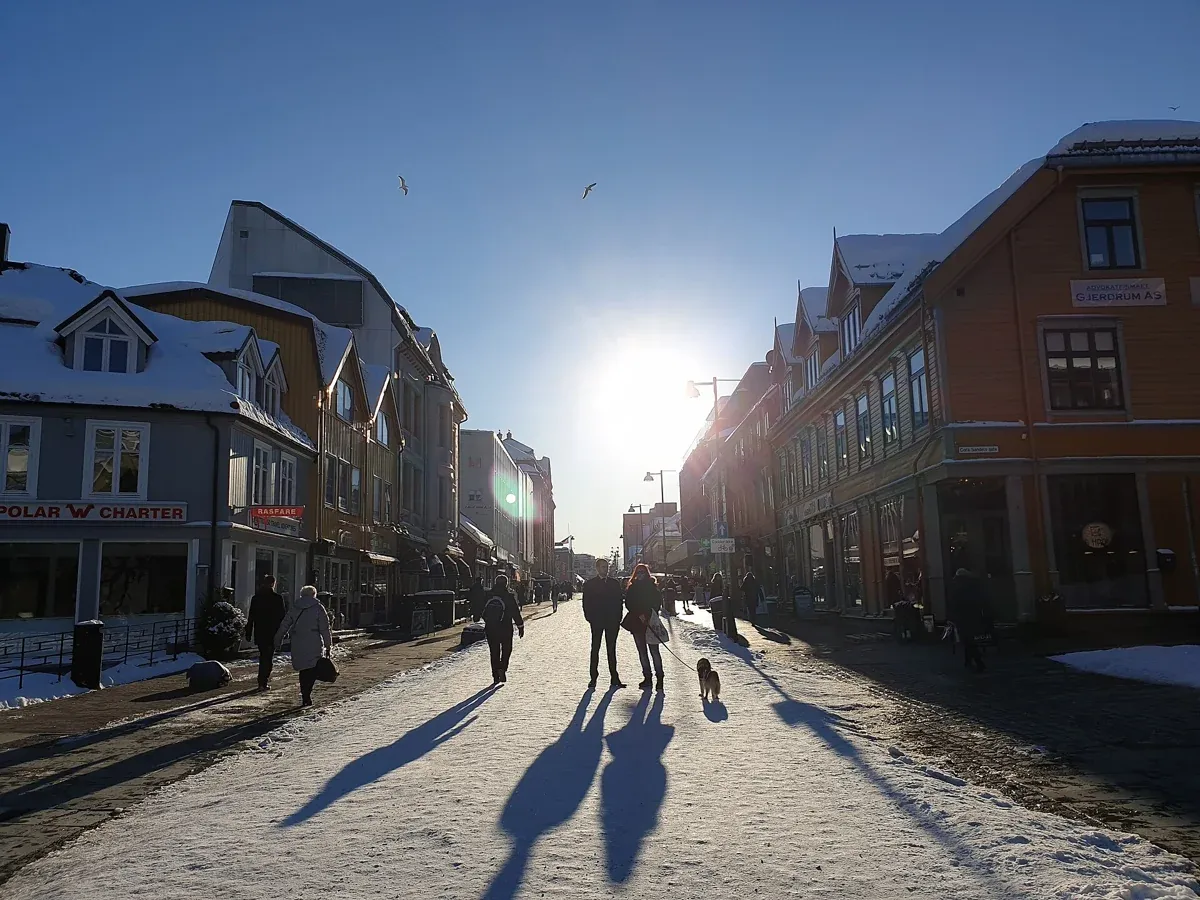
Low sun on Storgata, Tromsø. Photo: WikiLucas00, CC BY-SA 4.0, via Wikimedia Commons.
Phones, cameras and batteries in the cold
Cold drains lithium batteries fast, and on a 9-hour aurora night with no toilets in the remote spots, there is no shop to buy a power bank from. Keep your phone in an inside jacket pocket close to your body rather than an outer pocket, and only take it out in short bursts for photos. Cold can drain a fully charged phone quickly, so keep it warm against your body.
Bring a power bank and keep it warm too, in the same inner pocket, and carry spare batteries for a proper camera in an inside pocket rather than the camera bag. Turn off functions you do not need, since searching for signal in a valley flattens the battery. For the aurora tours, the guide on the Sami reindeer camp and northern lights night photographs guests under the lights, so you can leave the tripod at home, and gloves with touchscreen fingertips earn their keep on every tour.
Dressing for the sled, the camp and the street in one day
Most itineraries mix all three: an icy walk to a meeting point, a bus or minibus ride, time outside with the herd, and an hour or more inside a warm lavvu or gamme around the fire. One outfit handles all of it if every layer comes off easily. Wear your base and mid layers as your indoor clothes, treat the insulated jacket as the layer you peel in the lavvu, and keep the hat and mittens in a pocket rather than on your head indoors.
Plan for the swing, not the average. Inside a turf hut by the fire it is warm, and outside on the sled the same afternoon it can feel far colder with wind chill. The people who suffer are the ones who sweat through a thick mid layer in the warmth and then go back out damp.
Loosen or open a layer before you feel hot, and you will stay comfortable through a 7-hour Camp Tamok day as easily as through a 3.5-hour camp visit.
Printable packing checklist
Everything below fits in a carry-on, and if your tour lends a thermal suit you can drop the two heaviest lines. Tick it off the night before you fly.
| Item | Why | Buy or pack |
|---|---|---|
| Merino or synthetic base layers, top and bottom | Cotton stays wet and freezes | Pack, one set is enough for a week |
| Fleece or wool mid layer | Does the actual insulating | Pack, one thick or two thin |
| Windproof insulated jacket | Wind chill on the open sled | Skip if your tour lends a thermal suit |
| Insulated winter boots | Asked for by the listings, streets get icy | Pack or buy, no rental on most tours |
| Ice grips for boots | Tromsø pavements are often icy | Buy, they cost almost nothing |
| Wool socks, worn plus a spare pair | Damp socks mean cold feet | Pack three pairs minimum |
| Mittens plus thin liner gloves | Mittens are warmer, liners for phone use | Pack |
| Hat covering the ears, neck warmer | Listings ask for hat and scarf by name | Pack |
| Sunglasses | Low sun on snow from late February | Pack, tiny ones fit a pocket |
| Power bank | Cold drains batteries fast | Pack, keep it in an inner pocket |
| Headlamp or phone light | Polar night from about 26 November to 15 January | Pack, the morning meeting points are dark |
| Lip balm, no perfume | Fragrances are not allowed near the herd on two tours | Buy the balm, leave the scent |
If you are travelling with children, the age minimums range from all ages on the main sledding tours to 4 and over at Camp Tamok and 8 and over on the snowshoe hike, and the clothing logic is the same as yours with one addition: kids cool faster, so a spare mid layer in the day bag is worth its weight. Reindeer sledding in Tromso with kids covers the family details tour by tour.
Questions and Answers
What should I wear in Tromsø in winter?
Wear a wool or synthetic base layer, a fleece or wool mid layer and a windproof insulated jacket, with insulated waterproof boots, mittens and a hat that covers your ears. Add ice grips for the frozen pavements and keep your phone in an inner pocket. Only some reindeer tours lend gear: Camp Tamok, the budget sledding-or-feeding tour and the aurora night.
How cold is Tromsø in winter?
Average highs run from -1.2°C (29.8°F) in February to 2.1°C (35.8°F) in November, with January and February lows around -5.3°C (22.5°F) to -5.6°C (21.9°F), and record lows near -18°C (-0.4°F). The camps outside town are often colder than these city figures, and wind chill on an open sled makes it feel colder still.
Do I need snow boots in Tromsø?
Yes. The listings ask for winter boots, and the city streets turn icy, especially in the first half of the winter. Insulated waterproof boots with room for a thick wool sock are the right choice, and strap-on ice grips make walking the centre far safer.
Do reindeer sledding tours provide warm clothes?
Only some do, so check your specific tour. The Camp Tamok day includes a thermal suit, winter boots, mittens and a hat, the budget sledding-or-feeding tour includes clothes, and the aurora night lends overalls from XS to XXXL if you give your size when booking. The snowshoe and feeding tour provides only snowshoes and poles, so boots and clothing are on you.
What to wear for northern lights in Tromsø?
Dress for standing still in the cold for long stretches, which is harder than sledding: full base and mid layers, a windproof insulated jacket, mittens, a hat and the warmest boots you own. On the Sami camp and aurora night, warm overalls are lent in sizes XS to XXXL, so bring warm layers underneath. Keep spare batteries in an inner pocket, since cold drains them fast.
Are jeans OK in Tromsø in winter?
No. Jeans are cotton, so once they get damp from snow or sweat they stay wet and freeze stiff, which is miserable on an open sled. Wear thermal base layers under insulated trousers or a lent thermal suit instead, and save the jeans for dinner in town.
What are some fun things to do in Tromsø during the winter?
Reindeer sledding and feeding at a Sami camp is the classic, and you can compare every option on the homepage catalog. In early February, Sámi Week brings the Norwegian Reindeer Racing Championships to Storgata, a 201 m sprint that is free to watch from the street. You can also visit the Sami exhibitions at Tromsø Museum, or try the feeding and snowshoe hike if you want to be active without sledding.
How to dress in Europe to not look American?
In Tromsø this question answers itself, because everyone dresses for the ice rather than for fashion. Fit in by prioritising function, and the reindeer camps will not care what you look like anyway.